BPC-157 and Inflammatory Bowel Disease: What the Preclinical Research Shows
Overview: BPC-157 and Gastrointestinal Research
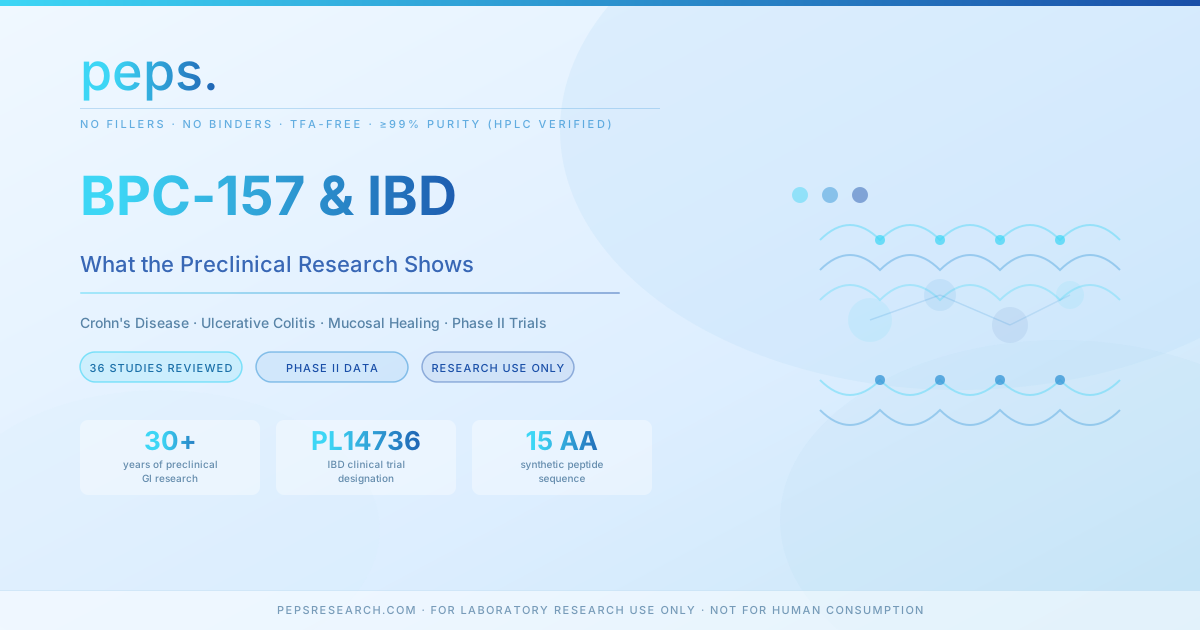
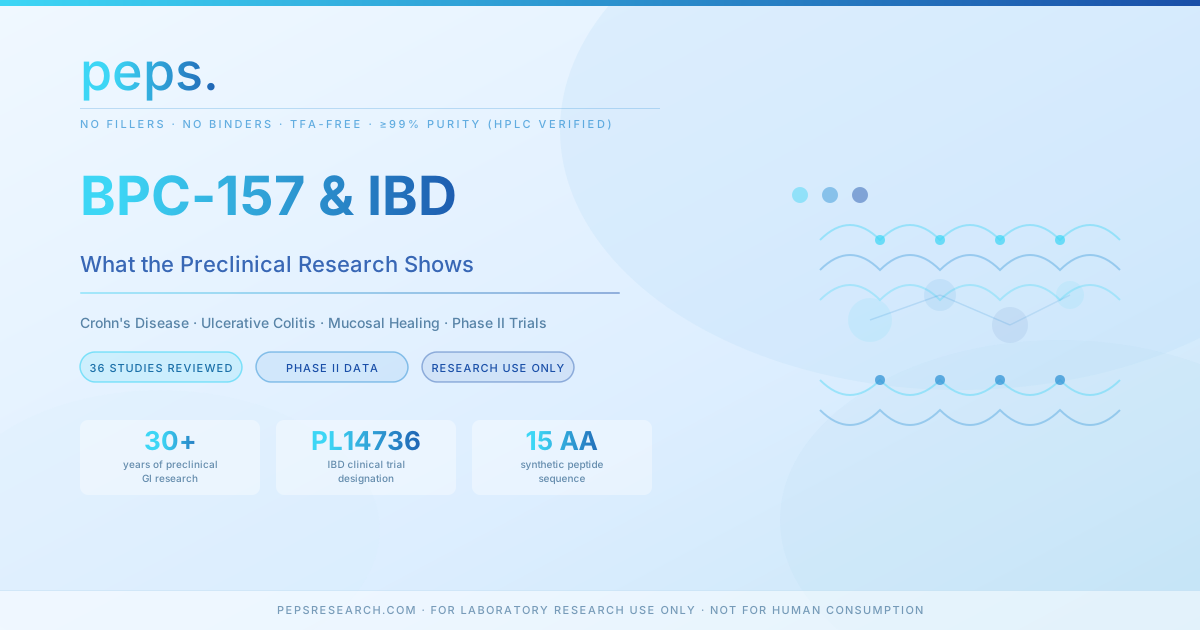
BPC-157 (Body Protection Compound-157) is a synthetic pentadecapeptide — a 15 amino acid sequence (GEPPPGKPADDAGLV) with a molecular weight of 1419 Da — that has been studied more extensively in gastrointestinal research than perhaps any other tissue system. With over 30 years of preclinical investigation and progression into Phase II clinical trials specifically for inflammatory bowel disease, BPC-157 represents one of the most data-supported research peptides in GI biology.
At Peps Research, BPC-157 is supplied at ≥99% purity via Ultra-HPLC verification with batch-specific COA documentation. View BPC-157 in our research catalog →
All content in this post is for educational and informational purposes only. BPC-157 is not FDA-approved for any indication and is not intended for human use. All Peps Research products are sold strictly for laboratory research use only.
What Are Crohn’s Disease and Ulcerative Colitis?
Inflammatory bowel disease (IBD) encompasses two primary conditions — Crohn’s disease and ulcerative colitis — both characterized by chronic, relapsing inflammation of the gastrointestinal tract.
Crohn’s disease can affect any segment of the GI tract from mouth to anus, but most commonly involves the terminal ileum and proximal colon. It is characterized by transmural inflammation — meaning inflammation extends through the full thickness of the bowel wall — leading to complications including strictures, fistulas, abscesses, and bowel obstruction.
Ulcerative colitis is confined to the colon and rectum and involves mucosal inflammation — affecting only the inner lining of the bowel. It typically presents as continuous inflammation beginning in the rectum and extending proximally.
Both conditions involve dysregulation of mucosal immune responses, disruption of intestinal barrier integrity, altered microvascular function, and impaired tissue repair mechanisms. These are precisely the systems that BPC-157 has been most extensively studied to affect in preclinical models.
The Clinical Trial Background
BPC-157 is not merely a preclinical curiosity in IBD research. Under the designations PL-10, PLD-116, and PL14736, the compound was advanced by Pliva (Croatia) into formal clinical evaluation for inflammatory bowel disease.
A 2025 systematic review published in the American Journal of Gastroenterology analyzed 36 studies conducted between 1993 and 2025. The review found that BPC-157 enhances growth hormone receptor expression and modulates several pathways involved in cell growth and angiogenesis while reducing inflammatory cytokines. In preclinical models, BPC-157 improved functional and structural outcomes in inflammatory bowel disease, GI ulcer, NSAID-induced injury, various GI fistula models, and repaired anastomotic site models.
The compound has been described as having a very safe profile in clinical evaluation, with no adverse effects observed across multiple organ systems in preclinical safety studies. No toxic or lethal dose thresholds were identified at ranges from 6 μg/kg to 20 mg/kg. Necropsy and histopathology revealed no adverse changes in organs, and no teratogenic, genotoxic, anaphylactic, or local irritation effects were observed.
Mechanisms Studied in IBD Research Models
Understanding why BPC-157 has attracted sustained research interest in IBD requires examining its proposed mechanisms of action in gastrointestinal tissue.
1. Mucosal Cytoprotection
BPC-157 has been characterized as a mediator of what researchers term “adaptive cytoprotection” — the ability to maintain mucosal integrity under conditions of chemical, mechanical, or ischemic injury. In rat models of acetic acid-induced gastric ulcers and cysteamine-induced duodenal lesions, BPC-157 demonstrated consistent acceleration of mucosal healing and epithelial regeneration. This cytoprotective activity appears to be mediated in part through maintenance of endothelial integrity in the mucosal microvasculature.
2. Anti-Inflammatory Cytokine Modulation
In colitis models, BPC-157 has been shown to reduce pro-inflammatory cytokines including TNF-α, IL-6, and IL-1β. The compound also appears to shift macrophage phenotype from inflammatory M1 to reparative M2, decrease COX-2 expression, and reduce myeloperoxidase activity — a marker of neutrophil-driven inflammation. These findings make it of particular interest to researchers studying the inflammatory signaling cascades central to IBD pathogenesis.
3. Nitric Oxide System Interaction
BPC-157’s interaction with the nitric oxide (NO) system has been one of the most consistently documented findings across the research literature. The compound enhances endothelial nitric oxide synthase (eNOS) expression and activity through the Src kinase-caveolin-1 pathway and Akt-eNOS axis, boosting nitric oxide production in endothelial cells. Notably, BPC-157 appears to maintain appropriate NO levels even when synthesis is blocked by inhibitors like L-NAME or overstimulated by L-arginine — suggesting a regulatory rather than simply stimulatory effect on the NO system.
This is significant in IBD research because mucosal endothelium plays an active role in the pathogenesis of both Crohn’s disease and ulcerative colitis, and NO signaling is central to mucosal blood flow, immune cell recruitment, and barrier function.
4. Tight Junction Stabilization
Research in BPC-157 has documented stabilization of tight junctions between intestinal epithelial cells — the protein complexes that regulate paracellular permeability and prevent translocation of luminal contents into the intestinal wall. In IBD, tight junction disruption is both a consequence and perpetuating factor of mucosal inflammation. The ability to restore barrier function while simultaneously addressing inflammatory signaling makes BPC-157 of significant mechanistic interest in IBD research models.
5. Angiogenesis and Vascular Repair
BPC-157 has been extensively studied for its role in promoting angiogenesis — the formation of new blood vessels. In IBD, mucosal healing requires robust revascularization of damaged tissue. Research has documented that within 15 minutes of BPC-157 treatment in colon anastomosis models, anastomotic tissue showed visible blood vessel formation compared to bloodless appearance in untreated controls. This rapid vascular response has made it a subject of particular interest in models of fistula healing and anastomotic repair.
Key Preclinical Findings in IBD-Relevant Models
Cysteamine and DSS Colitis Models
In cysteamine and dextran sodium sulfate (DSS) colitis models — the two most widely used preclinical IBD models — BPC-157 reduced inflammation and promoted mucosal healing in both ulcerative colitis-like and Crohn’s disease-like conditions. BPC-157 also improved healing of colon-colon surgical anastomoses that otherwise failed under inflammatory conditions.
Colocutaneous Fistula Research
One of the most compelling preclinical findings involves the healing of colocutaneous fistulas — abnormal connections between the colon and skin that represent one of the most challenging complications of Crohn’s disease. Published research demonstrated BPC-157-mediated fistula closure even when therapy was postponed for one month following fistula creation, suggesting an effect on chronic rather than only acute wound healing conditions.
Short Bowel Syndrome Models
Following extensive intestinal resection in rat models — a condition analogous to the surgical complications sometimes required in severe Crohn’s disease — BPC-157 rapidly promoted intestinal adaptation and prevented malabsorption, suggesting relevance to post-surgical GI research models.
Anastomotic Healing
In rats undergoing colon anastomosis surgery, BPC-157 prevented anastomotic leaks and separation, increased biomechanical strength at the anastomotic site before rupture, and reduced tissue necrosis. This has direct relevance to research models examining post-surgical healing in IBD-complicated bowel surgery.
Important Research Limitations
The preclinical evidence base for BPC-157 in IBD is substantial, but several critical limitations must be acknowledged by researchers:
Human clinical data remains limited. The Phase II clinical trials under PL14736 have not yet produced published comprehensive efficacy data. Most evidence comes from animal models, primarily rodent studies.
Translational uncertainty. Rodent IBD models, while useful, do not fully replicate the complex immunopathology of human Crohn’s disease or ulcerative colitis. Findings may not translate directly to human outcomes.
Mechanism complexity. BPC-157’s multi-system effects on NO signaling, angiogenesis, and cytokine modulation create interpretive challenges in isolating specific mechanisms responsible for observed outcomes.
Regulatory status. BPC-157 is not FDA-approved for any indication. The FDA classifies it as Category 2, noting insufficient human safety data. It is not a drug and is not suitable for therapeutic use outside approved clinical trial frameworks.
All BPC-157 research at Peps Research is conducted in laboratory settings consistent with RUO (Research Use Only) guidelines.
Sourcing Research-Grade BPC-157
For researchers studying gastrointestinal inflammation, mucosal healing, or IBD-related mechanisms, compound quality is a critical experimental variable. Impure or misidentified peptides can produce confounded results, particularly in cytokine-sensitive and barrier-function assays.
Peps Research supplies BPC-157 at ≥99% purity (Ultra-HPLC verified), with mass spectrometry identity confirmation and batch-specific COA documentation for every order. View BPC-157 and our complete research peptide catalog →
Frequently Asked Questions
Has BPC-157 been tested in human clinical trials for IBD?
Yes. Under the designations PL-10, PLD-116, and PL14736, BPC-157 was advanced into Phase II clinical trials for inflammatory bowel disease. Preclinical safety studies showed a favorable profile with no adverse effects identified. Comprehensive published efficacy data from human trials is not yet available. BPC-157 is not FDA-approved for any indication and is not for human use outside approved clinical frameworks.
What preclinical IBD models have been used to study BPC-157?
The most commonly used models include cysteamine-induced colitis (Crohn’s disease-like), dextran sodium sulfate (DSS) colitis (ulcerative colitis-like), colocutaneous fistula models, colon anastomosis models, and NSAID-induced intestinal injury models.
What is BPC-157’s proposed mechanism in IBD research?
Multiple mechanisms have been proposed based on preclinical data, including anti-inflammatory cytokine modulation (TNF-α, IL-6, IL-1β reduction), tight junction stabilization, nitric oxide system regulation via eNOS and the Akt-eNOS axis, pro-angiogenic effects on mucosal vasculature, and macrophage phenotype modulation from M1 to M2.
Is BPC-157 the same as PL14736?
PL14736 was the investigational new drug designation given to BPC-157 by Pliva (Croatia) for clinical evaluation in IBD. The underlying compound — the 15 amino acid sequence GEPPPGKPADDAGLV — is the same synthetic pentadecapeptide referred to throughout the research literature as BPC-157.
What purity level of BPC-157 is appropriate for IBD-related research?
For cytokine assays, barrier function studies, and inflammation-sensitive experimental models, ≥99% HPLC purity is the recommended standard. Lower purity peptides may introduce inflammatory confounds from synthesis impurities. Endotoxin testing should also be confirmed for cell-based inflammatory assays.
Final Note
BPC-157 represents one of the most extensively studied research peptides in gastrointestinal biology, with a research record spanning over three decades and progression into formal clinical evaluation for inflammatory bowel disease. For researchers designing studies in mucosal healing, intestinal barrier function, or IBD-related inflammatory signaling, it remains a compound of significant scientific interest.
All products are for laboratory research only. Not for human or veterinary use. Not approved by the FDA.
Key references: Sikiric et al., PubMed 22300085; American Journal of Gastroenterology 2025 systematic review (36 studies, 1993–2025); Journal of Physiology and Pharmacology IBD/MS study; ScienceDirect fistula healing study PubMed 18818478.
