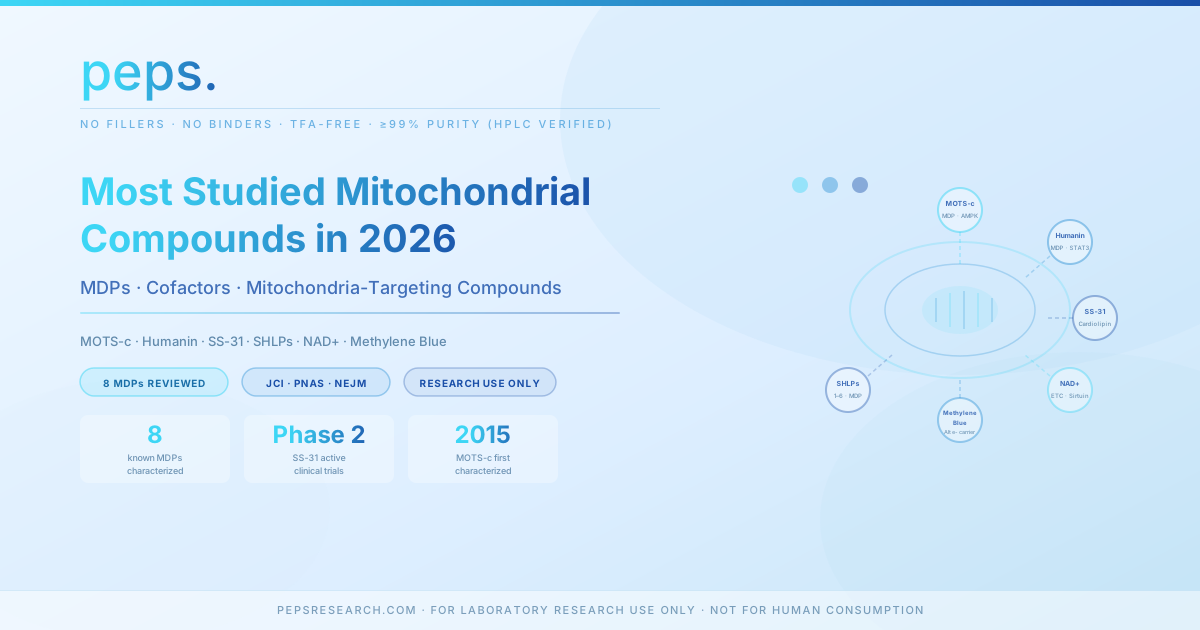
The Most Studied Mitochondrial Compounds in 2026: MDPs, Cofactors & Beyond
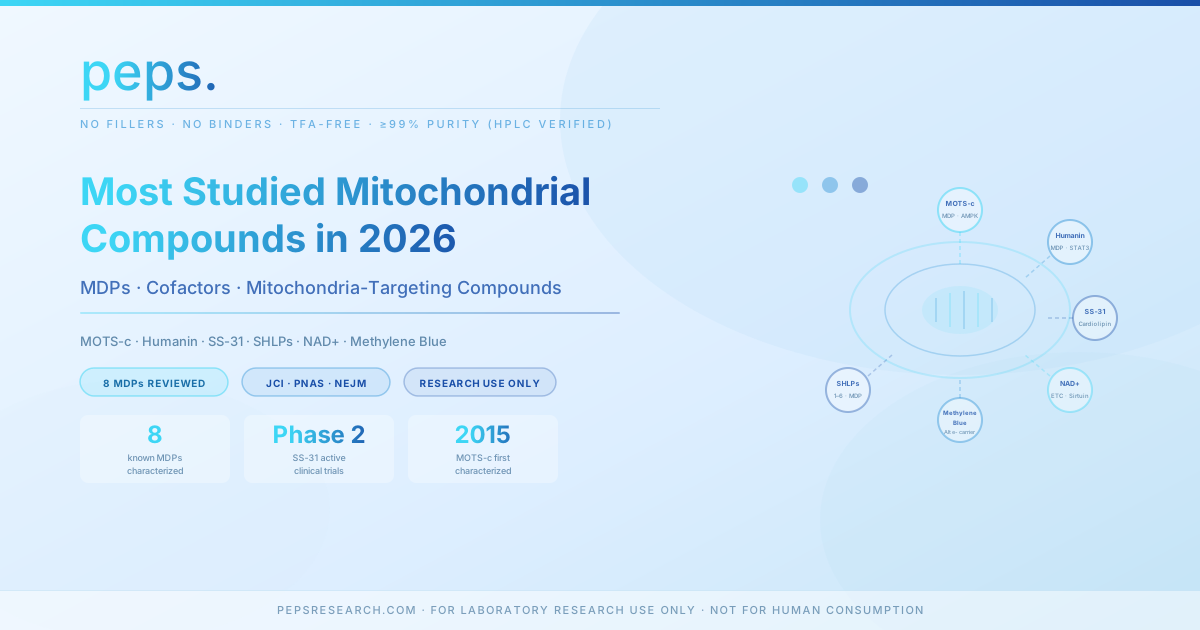
Overview
Mitochondria were once described simply as the cell’s power plants. The research of the past decade has dramatically revised that understanding. Mitochondria are now known to function as signaling hubs — producing peptides, regulating gene expression, coordinating systemic stress responses, and influencing the pace of biological aging across virtually every tissue type.
This post summarizes the most extensively researched mitochondria-targeting compounds across three categories: mitochondria-derived peptides (MDPs), mitochondrial cofactors, and mitochondria-targeting synthetic compounds. All are current subjects of published peer-reviewed research.
All content is for educational and informational purposes only. All Peps Research products are sold strictly for laboratory research use only and are not intended for human use or therapeutic application.
View our full mitochondrial research compound catalog →
Category 1: Mitochondria-Derived Peptides (MDPs)
MDPs are peptides encoded within the mitochondrial genome itself — a remarkable biological finding given that the human mitochondrial genome contains only 37 genes and was long believed to encode only structural proteins and RNA molecules. The discovery that it also encodes bioactive signaling peptides has opened an entirely new field of mitochondrial biology.
To date, 8 MDPs have been characterized in the published literature, all reviewed in a 2022 paper in the Journal of Clinical Investigation.
MOTS-c
The most extensively studied MDP in metabolic research. MOTS-c is a 16 amino acid peptide encoded within the 12S rRNA gene of mitochondrial DNA, first characterized in Cell Metabolism (2015, PubMed 25738459). Its primary mechanism involves the Folate-AICAR-AMPK pathway, activating AMPK — the master cellular energy sensor — in skeletal muscle and beyond.
Key findings across published research:
Prevents age-dependent and high-fat-diet-induced insulin resistance
Circulating levels decline ~21% between ages 18–30 and 70–81
Restores mitochondrial respiration in diabetic cardiac tissue (Frontiers in Physiology, 2025)
Reduces cellular senescence in aging pancreatic islets (Exp & Mol Med, 2025 — Harvard/MIT)
Translocates to the nucleus under metabolic stress to regulate gene expression
MOTS-c is available through Peps Research at ≥99% HPLC-verified purity. View MOTS-c →
Humanin
Humanin is a 21 amino acid peptide encoded within the 16S rRNA region of mitochondrial DNA. It was originally discovered in 2001 during a screen for factors that protect against neuronal death in Alzheimer’s disease models, making it the first MDP identified.
Key findings across published research:
Overexpression of humanin is sufficient to extend lifespan in C. elegans — the first demonstration that an MDP alone could increase organism lifespan (Aging, 2020, PubMed 32575074)
Children of centenarians have significantly higher circulating humanin levels than age-matched controls without centenarian parents — connecting humanin to human exceptional longevity
Humanin levels are stable in the naked mole-rat, one of the longest-lived rodent species relative to body size
Neuroprotective effects documented across Alzheimer’s, Parkinson’s, and ischemic stroke research models
Anti-apoptotic signaling via STAT3 and IGF-1 receptor pathways
Cardioprotective effects in ischemia-reperfusion injury models
Humanin is available through Peps Research at ≥99% HPLC-verified purity. View Humanin →
SS-31 (Elamipretide)
SS-31 — also known as elamipretide or Bendavia — is a synthetic tetrapeptide (4 amino acids: D-Arg-Dmt-Lys-Phe-NH2) designed to selectively target the inner mitochondrial membrane. While not strictly a mitochondria-encoded peptide, it is designed to act specifically on mitochondrial membrane architecture and is among the most clinically advanced mitochondria-targeted peptides in existence.
SS-31 binds cardiolipin — a phospholipid unique to the inner mitochondrial membrane that is essential for cristae structure, electron transport chain organization, and cytochrome c anchoring. Cardiolipin content and structural integrity decrease with age and in mitochondrial disease states.
Key findings across published research:
PNAS (2020) — SS-31 interacts with cardiolipin to stabilize cristae structure, improve electron transport chain organization, and reduce mitochondrial ROS production
Active Phase 2 clinical trials for primary mitochondrial myopathy (MMPOWER-3 trial)
Phase 2 trials for heart failure with preserved ejection fraction (HFpEF)
Documented effects in aging skeletal muscle — reversing age-related decline in mitochondrial morphology and function in old mouse models
Renal protection in ischemia-reperfusion models
SS-31 represents the most clinically advanced mitochondria-targeting peptide in active pharmaceutical development, with the largest human dataset of any compound in this category.
SS-31 is available through Peps Research at ≥99% HPLC-verified purity. View SS-31 →
SHLPs (Small Humanin-Like Peptides) 1–6
The six SHLP peptides were identified in 2016 as additional open reading frames within the 16S rRNA region of mitochondrial DNA — the same region that encodes humanin. Their discovery expanded the known MDP family from 2 to 8 members.
SHLP2 and SHLP3 have received the most research attention:
SHLP2 demonstrated the strongest pro-survival and anti-apoptotic effects of all SHLPs in initial characterization studies
SHLP2 and SHLP3 improved mitochondrial function and reduced cellular stress markers in aging models
SHLP6 showed pro-apoptotic effects — the first MDP with evidence of pro-death signaling, suggesting MDPs may regulate not only cell survival but cell fate more broadly
The full biological roles of SHLPs 1–6 remain under active investigation and represent some of the most open research territory in the MDP field.
Category 2: Mitochondrial Cofactors
NAD+ (and Precursors: NMN, NR)
NAD+ is the electron carrier that drives ATP synthesis in the mitochondrial electron transport chain, activates sirtuins (SIRT1, SIRT3) to regulate mitochondrial biogenesis and protein acetylation, enables DNA repair via PARP, and regulates mitophagy.
NAD+ levels decline 40–60% across tissues with aging. Supplementation research via precursors NMN (nicotinamide mononucleotide) and NR (nicotinamide riboside) has generated extensive human clinical data, making this the most studied mitochondria-supporting small molecule in the longevity field.
Science (2015) — landmark Verdin review established NAD+ decline as a hallmark of aging with implications across metabolic disease, neurodegeneration, and cancer biology.
Category 3: Mitochondria-Targeting Synthetic Compounds
Methylene Blue
Methylene blue is a synthetic phenothiazine compound with over 100 years of medical history — FDA-approved as a drug for methemoglobinemia — that has experienced significant renewed research interest for its mitochondria-targeting properties.
Unlike MDPs or NAD+ precursors, methylene blue is not derived from or produced by mitochondria. It is included in the mitochondrial research landscape because it acts directly on the electron transport chain as an alternative electron carrier — a mechanism that makes it uniquely relevant to researchers studying mitochondrial dysfunction.
Mechanism in the electron transport chain: Methylene blue accepts electrons from NADH (at Complex I) and donates them directly to cytochrome c (upstream of Complex IV), effectively bypassing the Complex I–III segment of the electron transport chain. This alternative pathway maintains electron flow and ATP synthesis even when Complex I or Complex III activity is impaired — a finding of significant interest in neurodegeneration research where Complex I deficiency is commonly observed.
Key findings across published research:
Molecular Neurobiology (2018, PubMed 28840449) — MB reroutes electrons from NADH to cytochrome c, increasing Complex IV activity and promoting mitochondrial function while mitigating oxidative stress
Progress in Neurobiology (2015) — MB accepts electrons from NADH and donates to cytochrome c, increasing oxygen consumption and decreasing glycolysis — effectively improving oxidative phosphorylation efficiency
PubMed 21454572 — MB functions as an alternative electron carrier, bypassing Complex I/III blockage, dramatically attenuating behavioral and neuropathological impairment in a Parkinson’s disease model
Journal of Cerebral Blood Flow & Metabolism (2023, King’s College London) — human neuroimaging study directly measuring MB’s effect on cerebral blood flow and brain metabolism in vivo — among the most current human data available on MB’s neurological effects
Alzheimer’s disease research models — MB has been studied as a tau aggregation inhibitor separately from its mitochondrial mechanism, making it a compound of dual interest in neurodegeneration research
Methylene blue is available through Peps Research for laboratory research use only. View Methylene Blue →
Compound Summary Table
CompoundCategoryPrimary MechanismMost Studied InClinical StageMOTS-cMDPAMPK via Folate-AICARMetabolism, aging, insulin resistancePreclinicalHumaninMDPSTAT3/IGF-1R anti-apoptoticNeurodegeneration, longevity, cardioprotectionPreclinicalSS-31Mitochondria-targeted peptideCardiolipin binding, ETC stabilizationHeart failure, mitochondrial myopathyPhase 2 clinical trialsSHLPs 1–6MDPVariable — pro-survival / pro-apoptoticAging, cell fate researchPreclinicalNAD+ / NMN / NRCofactorETC electron carrier, sirtuin activationAging, metabolism, DNA repairHuman clinical dataMethylene BlueSynthetic compoundAlternative ETC electron carrierNeurodegeneration, cognition, Parkinson’sLong-term use / early trials
Why This Research Field Matters
The convergence of MDP biology, NAD+ research, and mitochondria-targeting synthetic compounds represents one of the most active frontiers in aging and metabolic biology. The unifying hypothesis — that mitochondrial dysfunction is a primary driver of aging and age-related disease — has moved from fringe speculation to mainstream geroscience over the past decade.
Each compound category addresses a different aspect of the same system: MDPs regulate mitochondrial stress signaling; NAD+ restores the substrate for electron transport; methylene blue provides an alternative electron pathway when normal transport is impaired. Researchers designing aging, neurodegeneration, or metabolic studies increasingly consider how these mechanisms interact.
Frequently Asked Questions
What makes a peptide a mitochondria-derived peptide (MDP)?
MDPs are specifically encoded within the mitochondrial genome — the separate, circular DNA molecule found within mitochondria distinct from nuclear DNA. Currently 8 MDPs have been identified: Humanin, MOTS-c, and SHLPs 1–6. All are encoded within open reading frames in the 12S or 16S ribosomal RNA genes of mitochondrial DNA.
Is SS-31 an MDP?
No. SS-31 is a synthetic tetrapeptide designed to target the inner mitochondrial membrane — specifically cardiolipin. It was engineered by researchers at Cornell University and is not encoded by the mitochondrial genome. It is classified as a mitochondria-targeted peptide rather than a mitochondria-derived peptide.
Is methylene blue a peptide?
No. Methylene blue is a synthetic phenothiazine compound — a small molecule, not a peptide. It is included in mitochondrial research contexts because it directly acts on the electron transport chain as an alternative electron carrier.
Why do MDP levels decline with age?
MDP production is linked to mitochondrial DNA copy number and mitochondrial function — both of which decline with age. As mitochondria become less numerous and functional with aging, production of MDPs including MOTS-c and humanin decreases proportionally.
What purity level is appropriate for MDP research?
For receptor-binding, cell signaling, and aging-related assays, ≥99% HPLC purity with mass spectrometry identity confirmation is the recommended standard. Batch-specific COA documentation is essential for research reproducibility.
All products are for laboratory research only. Not for human or veterinary use. Not approved by the FDA.
Key references: Lee et al. JCI 2022 (all 8 MDPs); Cobb et al. Aging 2020 (PubMed 32575074, humanin lifespan); Zhang et al. Cell Metabolism 2015 (PubMed 25738459, MOTS-c); PNAS 2020 SS-31 cardiolipin; Tucker et al. Mol Neurobiol 2018 (PubMed 28840449, MB ETC); PubMed 21454572 MB Parkinson’s model; Verdin Science 2015 (PubMed 26785480, NAD+).
