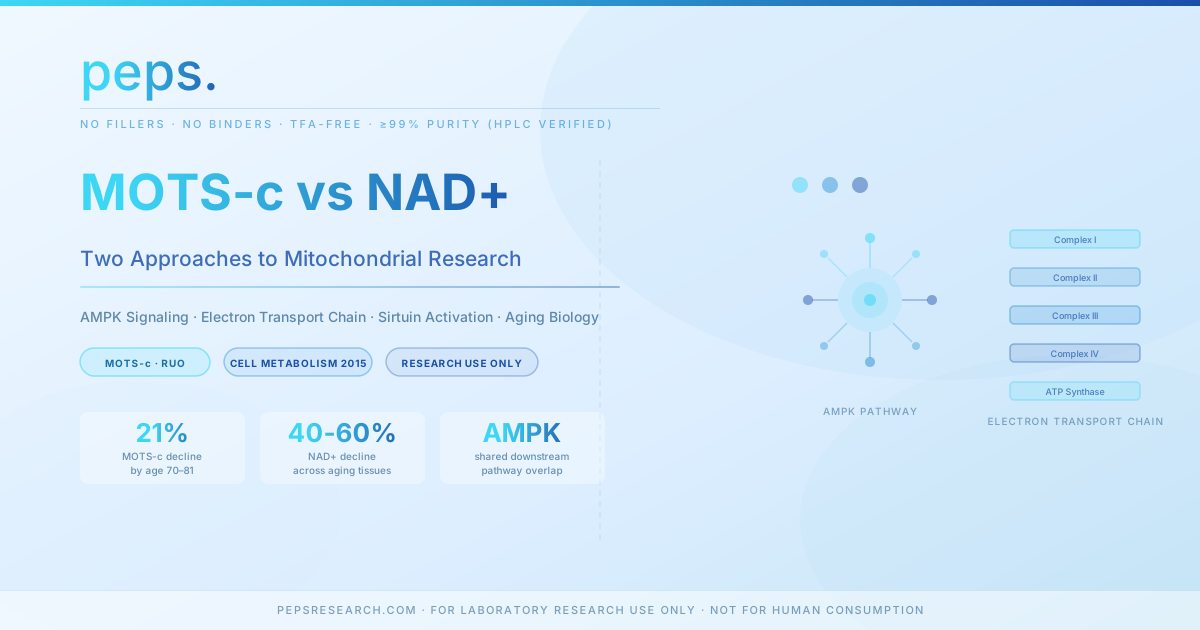
MOTS-c vs NAD+: Two Different Approaches to Mitochondrial Research
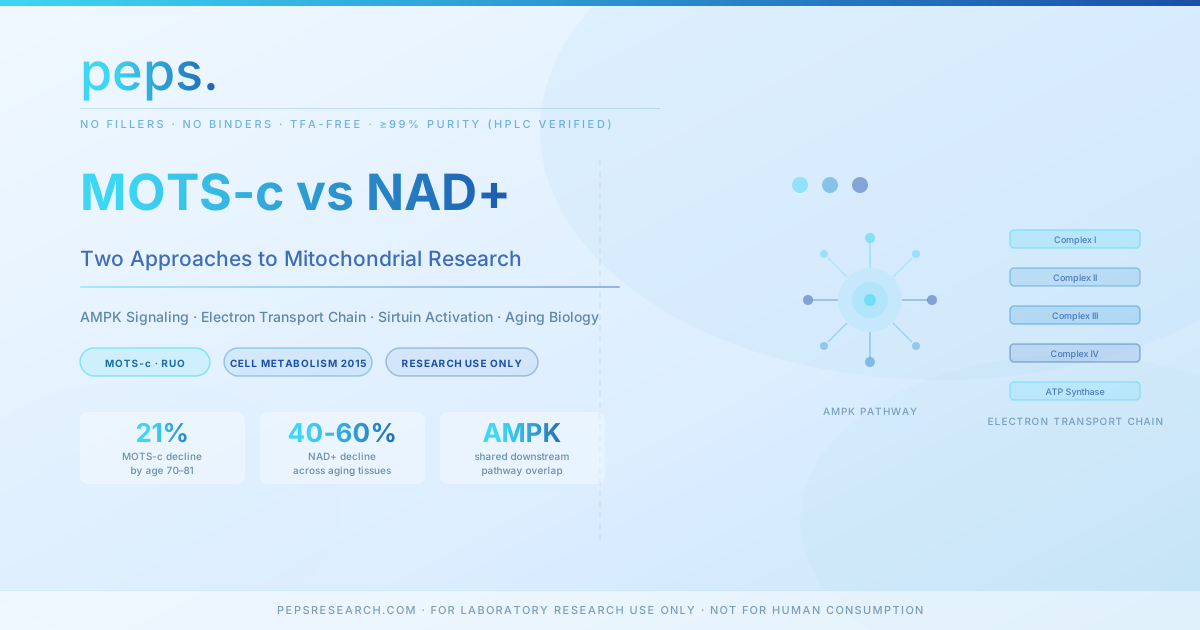
Overview
MOTS-c and NAD+ are two of the most researched mitochondria-related compounds in the longevity and metabolic biology literature. Both are studied in the context of aging, energy metabolism, and mitochondrial function — yet they operate through distinct mechanisms and target different aspects of the same underlying biological system.
This post compares their research profiles, explains why they are increasingly studied together in aging and metabolic models, and outlines what the published literature suggests about their complementary roles.
All content is for educational and informational purposes only. All Peps Research products are sold strictly for laboratory research use only and are not intended for human use or therapeutic application.
View MOTS-c and our full research peptide catalog →
The Mitochondrial Decline Problem
Both MOTS-c and NAD+ research converge on a single underlying biological reality: mitochondrial function declines with age, and this decline is increasingly understood as a driver — not merely a consequence — of aging-related pathology.
The evidence base supporting mitochondrial decline as a primary aging mechanism includes:
Reduced mitochondrial DNA copy number in aged tissues
Decreased electron transport chain Complex I and Complex IV activity
Impaired mitophagy (the cellular process for clearing damaged mitochondria)
Accumulation of dysfunctional mitochondria driving cellular senescence
Systemic reductions in both NAD+ and mitochondria-derived peptides with advancing age
MOTS-c and NAD+ are studied as interventions in this same biological system — but from entirely different entry points.
What Is NAD+?
Nicotinamide adenine dinucleotide (NAD+) is a coenzyme found in every living cell, essential to mitochondrial function and cellular energy metabolism. It is not a peptide — it is a small molecule cofactor derived from niacin (vitamin B3) and its precursors, including NMN (nicotinamide mononucleotide) and NR (nicotinamide riboside).
NAD+ levels decline significantly with age across tissues — estimated reductions of 40–60% between young adulthood and older age in human studies. This decline is associated with impaired mitochondrial function, reduced sirtuin activity, compromised DNA repair, and increased cellular senescence.
NAD+ Mechanism of Action in Mitochondria
Electron transport chain substrate: NAD+ is the primary electron carrier in the mitochondrial electron transport chain. NADH (the reduced form of NAD+) donates electrons to Complex I, driving ATP synthesis. Without sufficient NAD+, electron transport chain efficiency collapses and ATP production drops.
Sirtuin activation (SIRT1/SIRT3): Sirtuins are NAD±dependent deacetylases that regulate mitochondrial biogenesis via PGC-1α (SIRT1) and mitochondrial protein acetylation (SIRT3). SIRT1/PGC-1α activation promotes formation of new mitochondria — a process called mitochondrial biogenesis. This is one of the most studied mechanisms in longevity biology.
PARP activity: NAD+ is consumed by PARP enzymes during DNA damage repair. Elevated PARP activity in aged or stressed cells accelerates NAD+ depletion, creating a feedback loop where cellular stress reduces the NAD+ needed to respond to it.
Mitophagy regulation: Adequate NAD+ levels are required for SIRT1-mediated regulation of autophagy and mitophagy — the selective degradation of damaged mitochondria. NAD+ depletion impairs mitophagy and allows dysfunctional mitochondria to accumulate.
Key NAD+ Research Publications
Verdin E., Science (2015) — PubMed 26785480. Landmark review establishing NAD+ decline as a hallmark of aging with therapeutic implications across metabolic disease, neurodegeneration, and cancer.
Yoshino et al., Cell Metabolism (2018) — NAD+ supplementation via NMN restores NAD+ levels in aged mice and improves multiple aging-related physiological decline markers.
PubMed 40604314 (2025) — Comprehensive review of NAD+ roles in mitochondrial function: ATP generation via electron transport chain, SIRT1/PGC-1α axis, antioxidant systems, and mitophagy regulation.
Rajman et al., Cell Metabolism (2018) — Review of therapeutic potential of NAD+ boosting molecules in aging and disease.
What Is MOTS-c?
MOTS-c is a 16 amino acid peptide encoded within the mitochondrial genome — the only known peptide to originate from the 12S rRNA gene region of mitochondrial DNA. First characterized in Cell Metabolism (2015), MOTS-c functions as a mitochondria-to-nucleus signal that coordinates systemic metabolic responses across tissues.
Unlike NAD+, MOTS-c is a peptide signaling molecule rather than a metabolic substrate. It does not directly participate in electron transport or ATP synthesis. Instead it regulates how cells respond to metabolic stress, primarily through AMPK activation.
MOTS-c Mechanism of Action
Folate-AICAR-AMPK pathway: MOTS-c inhibits the folate cycle, causing AICAR accumulation, which directly activates AMPK — the master cellular energy sensor. AMPK activation triggers downstream programs including increased fat oxidation, enhanced glucose uptake, and mitochondrial stress response.
Mitochondrial stress signaling (UPRmt): MOTS-c participates in the mitochondrial unfolded protein response — a stress-response pathway that helps cells adapt to mitochondrial dysfunction. This function is distinct from any mechanism of NAD+ action.
Anti-senescence effects: The 2025 Harvard/MIT study in Experimental & Molecular Medicine demonstrated MOTS-c reduces cellular senescence in aging pancreatic islet cells — connecting mitochondrial peptide signaling to one of the central mechanisms of biological aging.
Nuclear translocation under stress: Under cellular stress, MOTS-c translocates to the nucleus and regulates nuclear gene expression — a remarkable finding that blurs the traditional separation between mitochondrial and nuclear gene regulation.
Key MOTS-c Research Publications
Zhang et al., Cell Metabolism (2015) — PubMed 25738459. Foundational MOTS-c characterization paper.
Kim et al., Journal of Translational Medicine (2023) — Full mechanism review: Folate-AICAR-AMPK pathway, energy metabolism, insulin resistance, aging.
IJMS (2022) — PubMed 36233287. 21% age-dependent decline in circulating MOTS-c; parallels noted with NAD+ decline trajectory.
Harvard/MIT, Experimental & Molecular Medicine (2025) — Anti-senescence effects in aging pancreatic islets.
MOTS-c vs NAD+: Mechanism Comparison
MOTS-cNAD+Biological classMitochondria-derived peptideCoenzyme / small moleculeOriginMitochondrial genome (12S rRNA)Dietary precursors / biosynthesisPrimary functionMetabolic stress signalingElectron carrier / enzyme cofactorAMPK activationYes — via Folate-AICAR pathwayIndirect (via SIRT1 → AMPK cross-talk)Mitochondrial biogenesisIndirectYes — via SIRT1/PGC-1αDNA repairNoYes — via PARPSenescence reductionYes (2025 data)Yes — via sirtuin activationAge-related decline~21% by age 70–8140–60% estimated across tissuesResearch statusPreclinical / early humanExtensive preclinical + human data
The Complementary Research Framework
The most important insight from the published literature is that MOTS-c and NAD+ are not redundant — they act on mitochondrial biology from different directions:
NAD+ is the fuel supply system. It provides the electron-carrying substrate that drives ATP synthesis in the electron transport chain, activates sirtuins, and enables DNA repair. Without adequate NAD+, the fundamental machinery of mitochondrial energy production degrades.
MOTS-c is the adaptive signaling system. It does not supply fuel — it coordinates how cells detect and respond to metabolic stress, promotes fat oxidation as a fuel source, activates AMPK-driven stress responses, and appears to reduce cellular senescence through mitochondria-to-nucleus signaling.
A research model studying mitochondrial aging might reasonably examine both: NAD+ to assess whether restoring the electron carrier substrate improves mitochondrial output, and MOTS-c to assess whether the peptide signaling arm of the mitochondrial stress response is preserved or impaired. This is reflected in the growing number of longevity research papers that reference both compounds in the same mechanistic framework.
Research Limitations
NAD+: Human data on NAD+ precursor supplementation is more extensive than MOTS-c but results have been mixed, with bioavailability, tissue distribution, and optimal precursor form (NMN vs NR vs niacin) still under active investigation.
MOTS-c: Human pharmacokinetic and dosing data is limited. Nuclear translocation and mitochondrial stress response effects have primarily been characterized in cell culture and rodent models.
Sourcing Research-Grade MOTS-c
For researchers studying mitochondrial aging, AMPK signaling, or energy metabolism, Peps Research supplies MOTS-c at ≥99% purity via Ultra-HPLC verification with mass spectrometry identity confirmation and batch-specific COA documentation.
View MOTS-c in our research peptide catalog →
Frequently Asked Questions
Is MOTS-c a form of NAD+ or related to it chemically?
No. They are entirely different classes of molecule. NAD+ is a small molecule coenzyme involved directly in electron transfer. MOTS-c is a 16 amino acid peptide that functions as a signaling molecule. They share a biological context — both are produced within mitochondria or act on mitochondrial function — but are structurally and mechanistically distinct.
Do MOTS-c and NAD+ activate the same pathways?
They share downstream overlap. Both influence AMPK activity — NAD+ indirectly through SIRT1 cross-talk, MOTS-c directly via the Folate-AICAR pathway. Both are connected to cellular senescence reduction and mitochondrial stress response. Their upstream mechanisms and primary functions are distinct.
Why do both decline with age?
The age-related decline in both compounds reflects a broader deterioration of mitochondrial function. NAD+ biosynthesis capacity decreases with age while consumption increases (elevated PARP activity, chronic inflammation). MOTS-c production declines as mitochondrial DNA function and number decrease with age. Both declines are documented as associated with — and potentially causal of — metabolic and cellular aging phenotypes.
What purity is required for MOTS-c in AMPK research?
For AMPK-sensitive metabolic assays, ≥99% HPLC-verified purity is the recommended standard. Mass spectrometry identity confirmation should be available via the supplier’s certificate of analysis.
All products are for laboratory research only. Not for human or veterinary use. Not approved by the FDA.
Key references: Zhang et al. Cell Metabolism 2015 (PubMed 25738459); Kim et al. J Translational Medicine 2023; IJMS 2022 (PubMed 36233287); Verdin E. Science 2015 (PubMed 26785480); PubMed 40604314 2025 NAD+ review; Harvard/MIT Exp Mol Med 2025.
