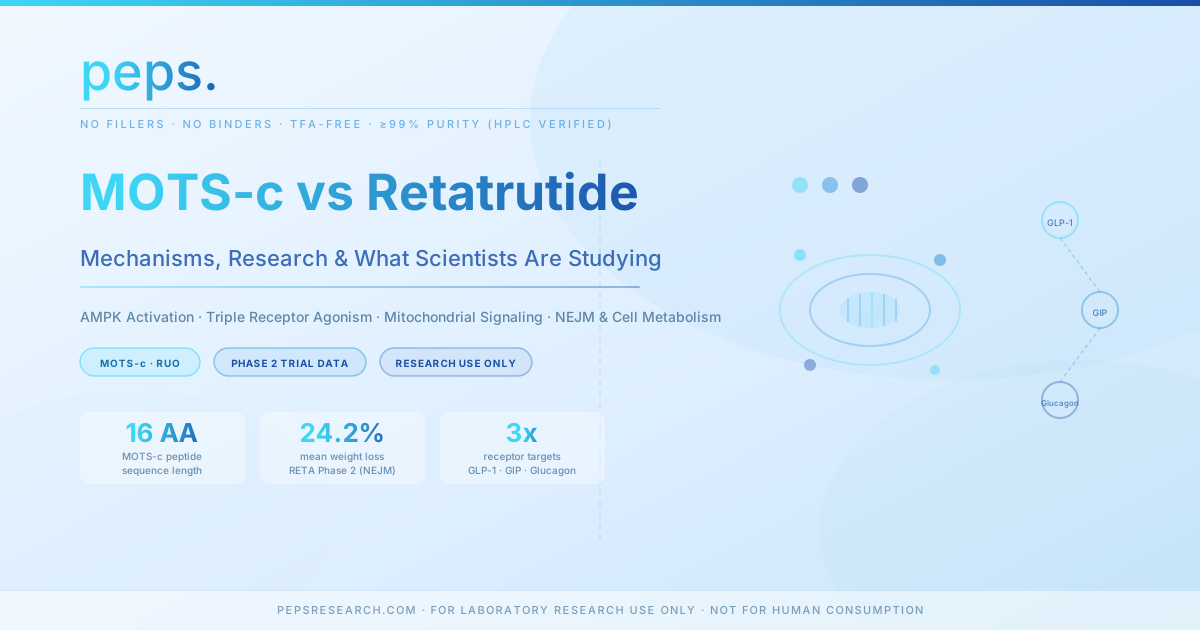
MOTS-c vs Retatrutide: Mechanisms, Research, and What Scientists Are Studying
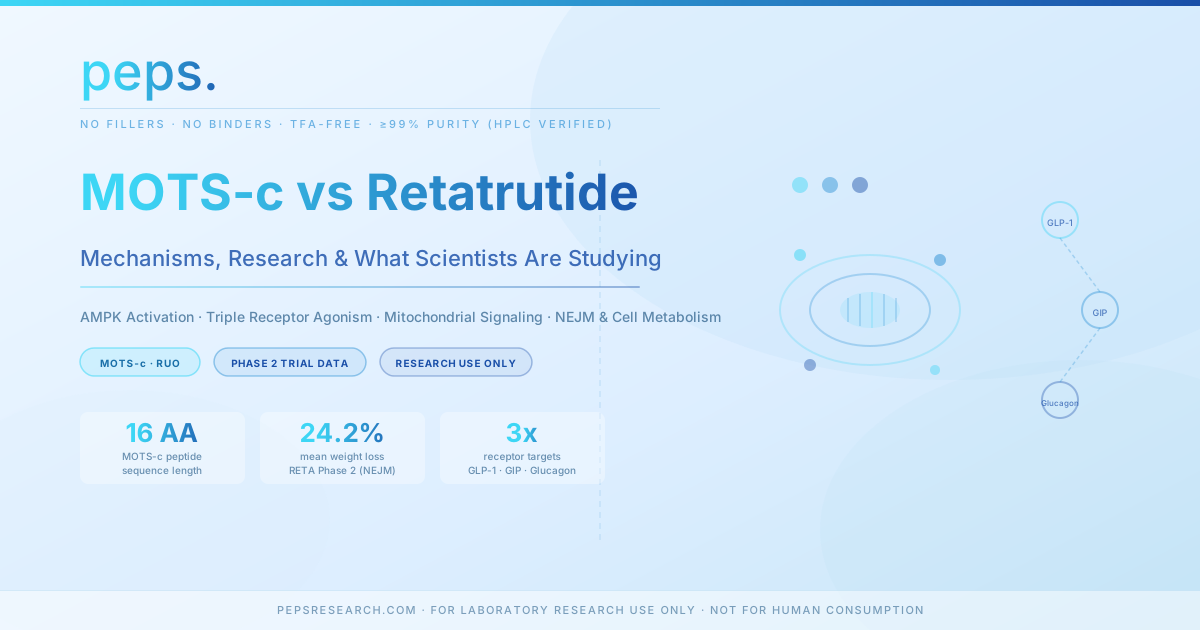
Overview
Two compounds dominate the metabolic research conversation in 2026: MOTS-c and Retatrutide. Both are studied in the context of body composition and metabolic health — but they operate through entirely different biological systems, target different tissues, and produce meaningfully different outcomes in the published literature.
This post compares their mechanisms, summarizes the research evidence, and explains why researchers are increasingly studying them as complementary rather than competing compounds.
All content is for educational and informational purposes only. All Peps Research products are sold strictly for laboratory research use only and are not intended for human use or therapeutic application.
View MOTS-c and our full research peptide catalog →
What Is MOTS-c?
MOTS-c (Mitochondrial Open Reading Frame of the 12S rRNA type-c) is a 16 amino acid peptide encoded within the mitochondrial genome — specifically within the 12S ribosomal RNA gene. It was first identified and characterized by researchers at the University of Southern California in 2015, published in Cell Metabolism.
Unlike most peptides studied in metabolic research, MOTS-c is not synthesized by nuclear DNA. It is produced endogenously within mitochondria and secreted into circulation, where it functions as a systemic signal coordinating energy metabolism across multiple tissue types — primarily skeletal muscle.
MOTS-c levels decline with age. Research published in the International Journal of Molecular Sciences (2022) documented a nearly 21% reduction in circulating MOTS-c in adults aged 70–81 compared to those aged 18–30, establishing an age-dependent decline pattern consistent with other mitochondria-derived peptides.
MOTS-c Mechanism of Action
The primary mechanism of MOTS-c centers on activation of AMPK (AMP-activated protein kinase) — the master regulator of cellular energy homeostasis. The signaling cascade involves:
Folate-AICAR-AMPK pathway: MOTS-c inhibits the folate cycle, leading to accumulation of AICAR (5-aminoimidazole-4-carboxamide ribonucleoside), which directly activates AMPK. This pathway is distinct from the mechanism by which exercise or caloric restriction activates AMPK, making MOTS-c of significant interest to researchers studying metabolic flexibility.
Skeletal muscle glucose uptake: AMPK activation in skeletal muscle enhances GLUT4 translocation and glucose uptake independent of insulin signaling — a mechanism of particular relevance in insulin resistance research models.
Fat oxidation: MOTS-c promotes fat oxidation as a primary fuel source by shifting substrate utilization away from glucose, with research demonstrating decreased fasted blood glucose and improved metabolic rate without affecting food intake.
Mitochondrial respiration: A 2025 study in Frontiers in Physiology demonstrated that MOTS-c restores mitochondrial respiration in type 2 diabetic cardiac tissue, suggesting systemic effects on mitochondrial function beyond skeletal muscle.
Anti-aging effects: A 2025 Harvard/MIT collaboration published in Experimental & Molecular Medicine showed MOTS-c levels decrease with aging in pancreatic islet cells and that MOTS-c treatment reduced islet cellular senescence and improved glucose intolerance in aging models.
Key MOTS-c Research Publications
Zhang et al., Cell Metabolism (2015) — PubMed 25738459. Foundational paper establishing MOTS-c as a mitochondrial-encoded peptide regulating insulin sensitivity via AMPK activation.
Kim et al., Journal of Translational Medicine (2023) — Comprehensive mechanism review covering the Folate-AICAR-AMPK pathway, energy metabolism, insulin resistance, inflammatory response, and aging.
Lee et al., Frontiers in Physiology (2025) — MOTS-c restores mitochondrial respiration in diabetic cardiac tissue.
Harvard/MIT collaboration, Experimental & Molecular Medicine (2025) — MOTS-c decline in aging pancreatic islets; treatment reduced senescence and improved glucose tolerance.
IJMS (2022) — PubMed 36233287. MOTS-c levels 21% lower in adults aged 70–81 vs 18–30.
What Is Retatrutide?
Retatrutide is a synthetic peptide drug under active pharmaceutical development — specifically a triple receptor agonist targeting GLP-1 (glucagon-like peptide-1), GIP (glucose-dependent insulinotropic polypeptide), and glucagon receptors simultaneously. It is not a mitochondria-derived peptide. It is a pharmaceutical compound in Phase 2 and Phase 3 clinical trials.
It is included here because the published research on retatrutide represents the most rigorous clinical dataset currently available on peptide-mediated metabolic intervention, and because researchers comparing MOTS-c to pharmaceutical metabolic agents frequently reference retatrutide as the benchmark for pharmacological fat loss in the current literature.
Retatrutide Mechanism of Action
GLP-1 receptor agonism: Reduces appetite, slows gastric emptying, improves glucose-dependent insulin secretion. This is the same mechanism as semaglutide (Ozempic/Wegovy), but one of three simultaneous targets in retatrutide.
GIP receptor agonism: Enhances insulin secretion in a glucose-dependent manner, improves fat storage regulation, and may contribute to appetite reduction and improved lipid metabolism.
Glucagon receptor agonism: Increases hepatic glucose output and thermogenesis — raising resting energy expenditure. This third agonist is what distinguishes retatrutide from dual agonists and is responsible for its superior fat loss profile in clinical data.
Key Retatrutide Research Publications
Jastreboff et al., New England Journal of Medicine (2023) — PubMed 37366315. Phase 2 trial. At 48 weeks, 100% of participants receiving 8mg and 12mg doses achieved ≥5% weight loss, with 24.2% mean weight loss at the highest dose vs 2.1% placebo. The largest weight loss percentage ever recorded in a peptide Phase 2 trial at time of publication.
Rosenstock et al., The Lancet (2023) — PubMed 37385280. Phase 2 T2D trial. 82% of participants reached HbA1c ≤6.5% with robust bodyweight reduction.
Nature Medicine (2024) — Retatrutide produced up to 82% reduction in liver fat content in MASLD (metabolic dysfunction-associated steatotic liver disease) patients — a finding that substantially expands the research scope beyond weight loss.
MOTS-c vs Retatrutide: Mechanism Comparison
MOTS-cRetatrutideOriginMitochondrial genomeSynthetic pharmaceuticalPrimary targetAMPK / skeletal muscleGLP-1 / GIP / Glucagon receptorsFat loss mechanismIncreased fat oxidation, metabolic flexibilityAppetite suppression + thermogenesisAppetite effectNone documentedSignificant reductionClinical trial statusPreclinical / early human studiesPhase 2 completed, Phase 3 activeAge-related declineYes — 21% decline by age 70–81N/A (synthetic compound)Tissue primary targetSkeletal muscle, mitochondriaHypothalamus, pancreas, liverResearch use statusRUO peptidePharmaceutical / IND
What the Research Difference Means
The distinction between these two compounds in the research literature is not simply a question of potency. They represent fundamentally different biological approaches to metabolic intervention:
Retatrutide works primarily through appetite and hormonal signaling — it reduces caloric intake and increases thermogenesis via receptor-mediated pathways in the hypothalamus, pancreas, and liver. Its clinical trial results are extraordinary by any standard in pharmacological research.
MOTS-c works through mitochondrial signaling — it enhances cellular energy efficiency, promotes fat oxidation as a substrate, and appears to counteract some of the metabolic decline associated with aging. It does not suppress appetite. Its effects in preclinical models are most pronounced in the context of metabolic stress: high-fat diet conditions, insulin resistance, aging, and cardiac metabolic dysfunction.
Researchers studying metabolic flexibility, mitochondrial function, and aging-related metabolic decline find MOTS-c most relevant. Researchers studying pharmacological weight loss interventions focus on retatrutide’s receptor agonism data.
Research Limitations
MOTS-c: The majority of evidence comes from rodent models. Human pharmacokinetic data and dose-response characterization are still early-stage. Long-term effects have not been established in human research.
Retatrutide: Clinical trial data is robust but the compound is a pharmaceutical drug, not an RUO research peptide. Researchers should distinguish between its pharmacological mechanism data (relevant to metabolic research) and its therapeutic application (pharmaceutical domain, not RUO).
Sourcing Research-Grade MOTS-c
For researchers studying mitochondrial peptide signaling, AMPK activation, or aging-related metabolic dysfunction, compound purity is critical. MOTS-c is a 16 amino acid sequence where even minor impurities can confound AMPK-sensitive assays.
Peps Research supplies MOTS-c at ≥99% purity via Ultra-HPLC verification with mass spectrometry identity confirmation and batch-specific COA documentation. View MOTS-c in our research catalog →
Frequently Asked Questions
Is MOTS-c a natural compound?
Yes. MOTS-c is encoded within the mitochondrial genome and produced endogenously in human cells. Circulating MOTS-c levels have been measured in human blood across multiple published studies. Its endogenous production declines with age.
Is retatrutide available as an RUO peptide?
No. Retatrutide is a pharmaceutical compound under active IND (Investigational New Drug) development. It is not classified as an RUO research peptide and is not available through research peptide suppliers.
What does AMPK activation mean in metabolic research?
AMPK is the primary cellular energy sensor — it is activated when cellular energy is low (high AMP:ATP ratio) and triggers pathways that restore energy balance, including increased fat oxidation, increased glucose uptake, and mitochondrial biogenesis. MOTS-c activates AMPK via the Folate-AICAR pathway independently of cellular energy status.
What purity is appropriate for MOTS-c research?
For AMPK-sensitive assays and insulin signaling studies, ≥99% HPLC purity is recommended. Mass spectrometry identity confirmation should be verified via the supplier’s COA.
All products are for laboratory research only. Not for human or veterinary use. Not approved by the FDA.
Key references: Zhang et al. Cell Metabolism 2015 (PubMed 25738459); Kim et al. J Translational Medicine 2023; Jastreboff et al. NEJM 2023 (PubMed 37366315); Rosenstock et al. The Lancet 2023 (PubMed 37385280); Nature Medicine 2024 MASLD study; IJMS 2022 (PubMed 36233287).
