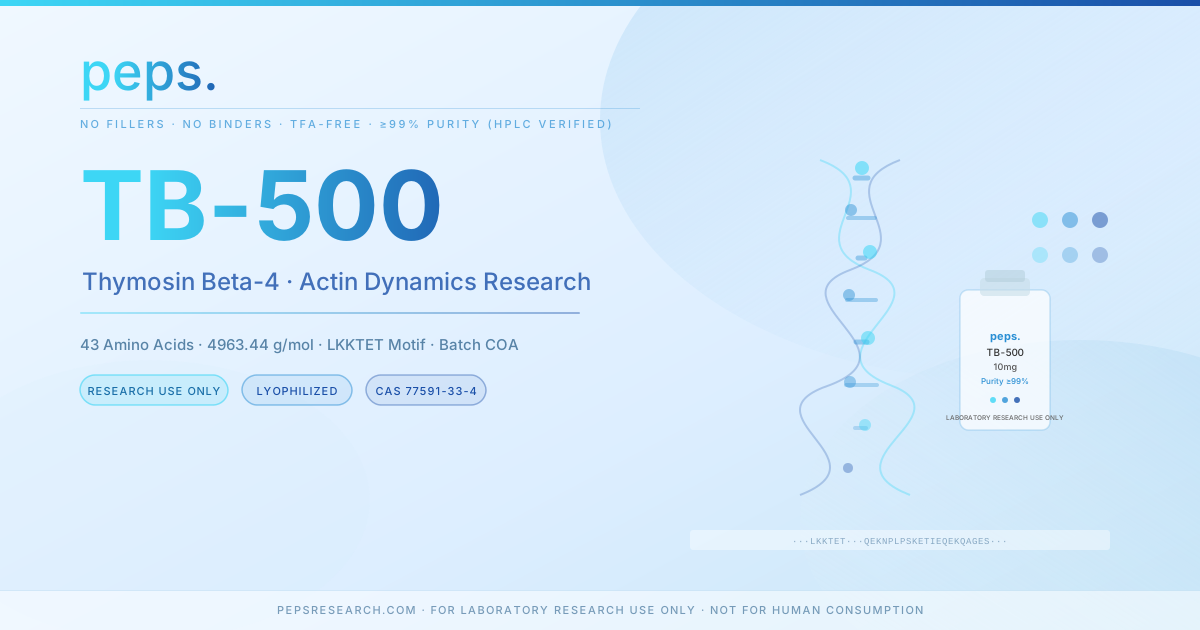
TB-500 Research Peptide: Actin Dynamics, Purity & What Researchers Need to Know
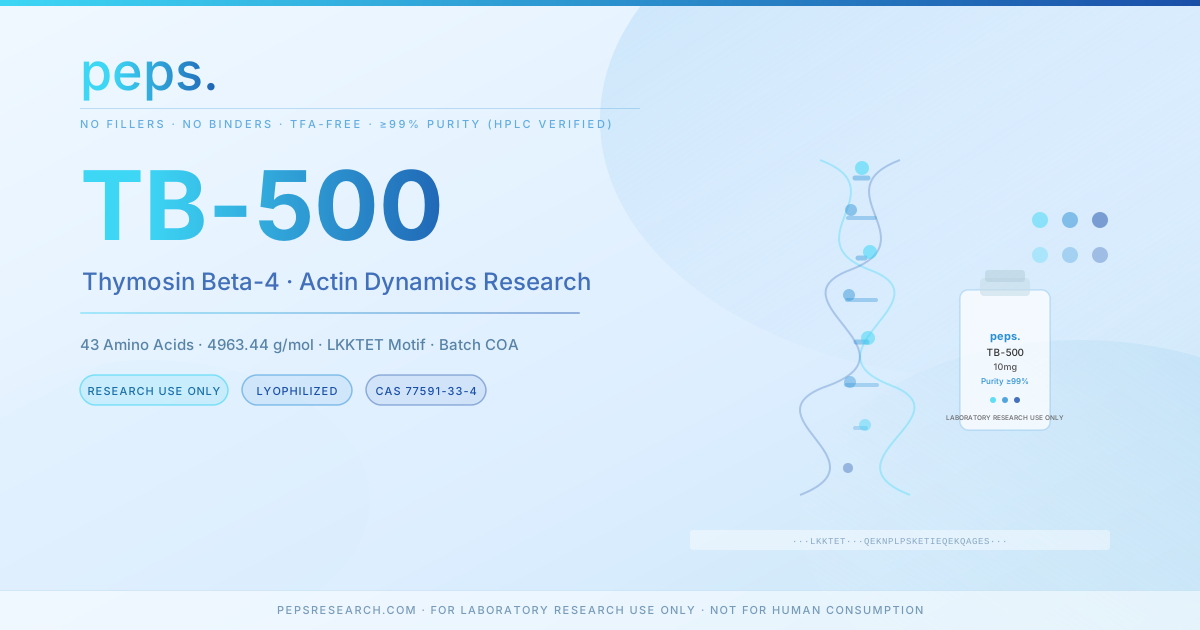
What Is TB-500?
TB-500 is a synthetic peptide corresponding to a 43-amino acid sequence derived from Thymosin Beta-4 (Tβ4), an endogenous actin-binding protein found in virtually all mammalian tissues. Thymosin Beta-4 is one of the most abundant intracellular proteins in mammalian cells, with particularly high concentrations in platelets, white blood cells, and wound fluid.
TB-500 is distinguished by its N-terminal acetylation, which enhances stability and makes it a reliable tool for controlled laboratory research. Its molecular formula is C212H350N56O78S, with a molar mass of approximately 4963.44 g/mol.
As a research compound, TB-500 is used exclusively in laboratory and preclinical settings. It is not approved by the FDA, is not a drug or supplement, and is not intended for human or veterinary use. All products at Peps Research are sold strictly for in vitro and laboratory research purposes only.
TB-500 vs. Thymosin Beta-4: Understanding the Difference
TB-500 and Thymosin Beta-4 are frequently referenced interchangeably in non-technical contexts, but they represent different molecules with distinct properties that matter in research design.
Thymosin Beta-4 (Tβ4): The full-length 43-amino acid endogenous peptide. Contains multiple functional domains beyond the actin-binding motif, enabling broader domain-dependent interactions in experimental models.
TB-500: A synthetic peptide including the critical LKKTET actin-binding motif at residues 17–23. Serves as a targeted probe for actin-motif-associated behavior in research workflows.
Disclaimer: All references to research findings are for informational and educational purposes only. Peps Research does not make any claims about the therapeutic or clinical efficacy of TB-500. This compound is for laboratory research only and is not for human consumption.
Primary Research Applications of TB-500
TB-500 is one of the most widely studied synthetic peptides in cytoskeletal biology. Researchers across multiple disciplines utilize it to investigate actin dynamics and their downstream effects on cellular behavior.
Actin Dynamics and Cytoskeletal Research
TB-500’s best-defined role in experimental literature is actin sequestration. Each molecule binds one G-actin monomer, preventing premature filament assembly and maintaining an intracellular pool of actin ready for rapid polymerization. Common laboratory assays include G-actin sequestration studies, F-actin polymerization state analysis, stress fiber organization imaging, and focal adhesion remodeling assays.
Angiogenesis and Endothelial Cell Research
TB-500 has been investigated in preclinical models for its role in endothelial cell migration, tubule formation, and vascular structure stabilization. The LKKTET actin-binding motif has been specifically identified in research as contributing to angiogenic activity.
Cell Migration and Tissue Biology
Research models examining cardiac, musculoskeletal, epithelial, and endothelial tissues have utilized TB-500 to explore how actin dynamics influence cellular repair mechanisms and structural reorganization.
Oxidative Stress and Inflammatory Signaling
Published preclinical literature includes cell-based assays examining oxidative stress signaling and inflammatory mediator balance under defined in vitro conditions.
The Purity Problem: Why COAs Are Critical in TB-500 Research
Purity is one of the most consequential variables in peptide research. In cytoskeletal studies especially, trace impurities can alter actin polymerization readouts and confound migration assays.
At Peps Research, every batch of TB-500 is verified using Ultra-HPLC analysis at ≥99% purity, with a batch-specific Certificate of Analysis (COA) provided for every order.
What researchers should look for in a TB-500 COA:
Purity percentage confirmed by HPLC (≥99% is the research standard)
Mass spectrometry identity confirmation — verifying the correct amino acid sequence
Batch number for full traceability
Molecular weight verification against the known 4963.44 g/mol reference
How TB-500 Is Synthesized for Research
TB-500 is produced via solid-phase peptide synthesis (SPPS). Following synthesis, rigorous HPLC purification isolates the target peptide from synthesis byproducts. The N-terminal acetylation is applied during synthesis to enhance stability and ensure reproducibility across batches. The final product is lyophilized into a stable powder suitable for long-term storage.
TB-500 vs. BPC-157: Key Differences for Researchers
TB-500 and BPC-157 are frequently studied in parallel in preclinical research, but they operate through distinct mechanisms.
Mechanism: TB-500 works primarily through actin sequestration and cytoskeletal modulation. BPC-157 operates through nitric oxide modulation and growth hormone receptor interactions.
Tissue focus: TB-500 is more frequently studied in cardiac, neural, and dermal tissue research. BPC-157 is more common in gastrointestinal, musculoskeletal, and vascular contexts.
Molecular weight: TB-500 is a significantly larger peptide (4963 g/mol, 43 amino acids) compared to BPC-157 (1419 g/mol, 15 amino acids).
Peps Research carries both compounds, each verified at ≥99% purity with batch-specific COAs.
Storage and Handling Guidelines for TB-500
Lyophilized powder: Store at -20°C for long-term stability. Short-term storage at 4°C is acceptable when kept away from light and humidity.
Reconstitution: Use sterile bacteriostatic water or an appropriate aqueous solvent consistent with your experimental protocol.
Post-reconstitution: Refrigerate at 4°C and avoid repeated freeze-thaw cycles.
Always handle research peptides in accordance with institutional biosafety guidelines.
Why Choose Peps Research for TB-500?
Ultra-HPLC Verified — Rigorous analytical confirmation of purity and identity
≥99% Purity Guaranteed — Batch-specific, never generic
Mass Spectrometry Identity Confirmed — Sequence accuracy verified
Transparent COAs — Accessible for every batch and every order
USA-Based — Domestic sourcing with reliable fulfillment
Fully Compliant — Sold strictly for laboratory research use only
Frequently Asked Questions
What is the difference between TB-500 and Thymosin Beta-4?
TB-500 is a synthetic peptide corresponding to the 43-amino acid sequence of Thymosin Beta-4, with N-terminal acetylation for enhanced stability. While the terms are sometimes used interchangeably, they represent different molecules. TB-500 targets actin-binding motif behavior, while full-length Thymosin Beta-4 contains additional domains not present in TB-500.
Is TB-500 legal to purchase for research?
TB-500 is legal to purchase in the United States for legitimate laboratory research purposes. It is not approved for human consumption and must not be used as a drug, supplement, or therapeutic. Peps Research sells all products in compliance with applicable federal and state guidelines.
How do I verify the purity of TB-500 I purchase?
Request a batch-specific COA that includes HPLC purity confirmation and mass spectrometry identity verification. The molecular weight should confirm approximately 4963.44 g/mol. Avoid vendors who provide undated or non-batch-specific documentation.
Can TB-500 and BPC-157 be used in the same research study?
Yes — some preclinical research designs include both peptides to examine complementary mechanisms. TB-500 targets actin dynamics and cytoskeletal signaling, while BPC-157 acts through nitric oxide and growth factor pathways.
Does Peps Research provide COAs for TB-500?
Yes. Every TB-500 order from Peps Research includes a batch-specific COA confirming ≥99% purity via Ultra-HPLC analysis and identity confirmation via mass spectrometry.
Final Note
TB-500 remains one of the most extensively studied synthetic peptides in cytoskeletal and tissue biology research. For laboratories requiring verified purity, traceable batch documentation, and compliant sourcing, Peps Research provides a reliable research-grade supply.
All products are for laboratory research only. Not for human or veterinary use. Not approved by the FDA.
